Vision–Language–Action
Learning generalist robot policies that connect visual understanding, language instructions, and closed-loop action.
Robotics MSc · National University of Singapore
I’m Jiacheng Zhang, a researcher working at the intersection of embodied AI, vision–language–action models, latent world models, and robot learning.
Research system
Hover to hold the three-dimensional orbit.
Learning generalist robot policies that connect visual understanding, language instructions, and closed-loop action.
Building predictive latent representations for long-horizon planning, fast replanning, and model-based control.
Improving reliability under camera shifts, sensor noise, visual perturbations, and unseen task conditions.
Selected work
My work asks how robots can preserve high-level intent while adapting their actions to new viewpoints, perturbations, and dynamic environments.
Multi-view VLA · JD Logistics
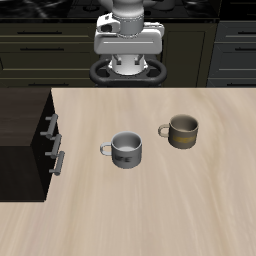
A dual-view extension of LaWAM that aligns third-person and wrist-camera observations to improve manipulation robustness under visual distribution shifts.
World-action models · JD Logistics
A slow–fast VLA framework with persistent stage-level manipulation intent and rapid action replanning across changing conditions.
Multi-agent latent world models · NUS MARMot Lab
Centralized latent dynamics, role-conditioned representations, cross-agent attention, and residual consensus for coordinated tugboat–barge control.
LLM agents · Singapore–MIT SMART
An agent-based research pipeline for multi-source robotics landscape mapping, structured extraction, automated verification, and human review.
Publications & manuscripts
Work spanning robotics landscape intelligence, world-action models, and cooperative model-based reinforcement learning.
About
I am pursuing an MSc in Robotics at the National University of Singapore, following a First Class BSc (Hons) in Computer Science (AI) from the University of Liverpool, where I graduated in the top three of my cohort.
Across academic labs and industry teams, I have built end-to-end training and evaluation pipelines, developed model-based control algorithms, and tested robot learning systems under systematic distribution shifts.